Designing one platform to replace the chaos of event management.
Successful events rely on hundreds of moving parts, from registrations and ticket sales to attendee communication and post-event reporting. Yet many organisers still manage these activities across multiple disconnected tools, creating unnecessary work behind the scenes and a fragmented experience for attendees.
Smart Events Rwanda was created to bring the entire event lifecycle into one connected platform. Instead of asking organisers to switch between ticketing systems, spreadsheets, messaging tools and analytics dashboards, the product unified every stage of planning, managing and measuring an event in one place.
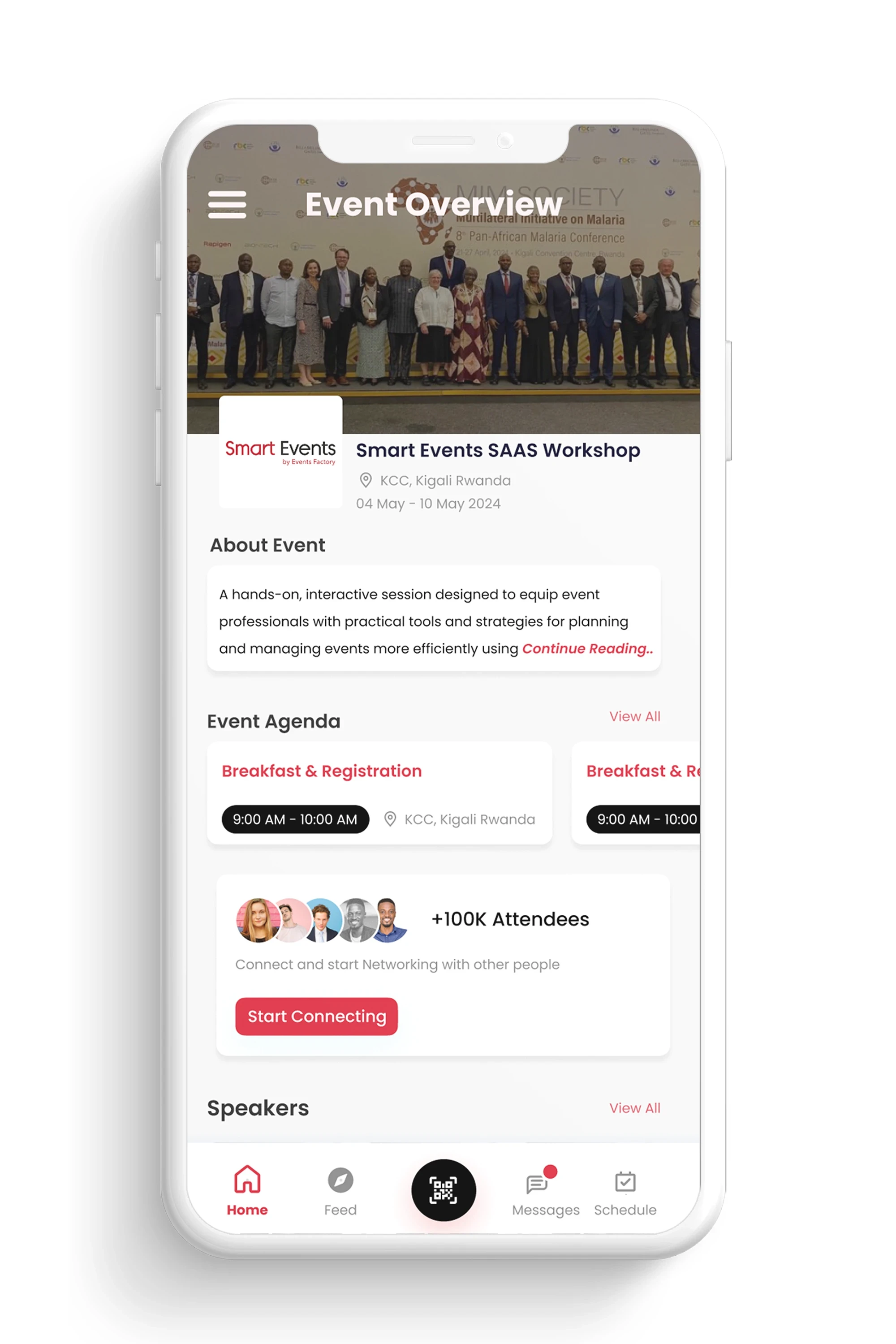
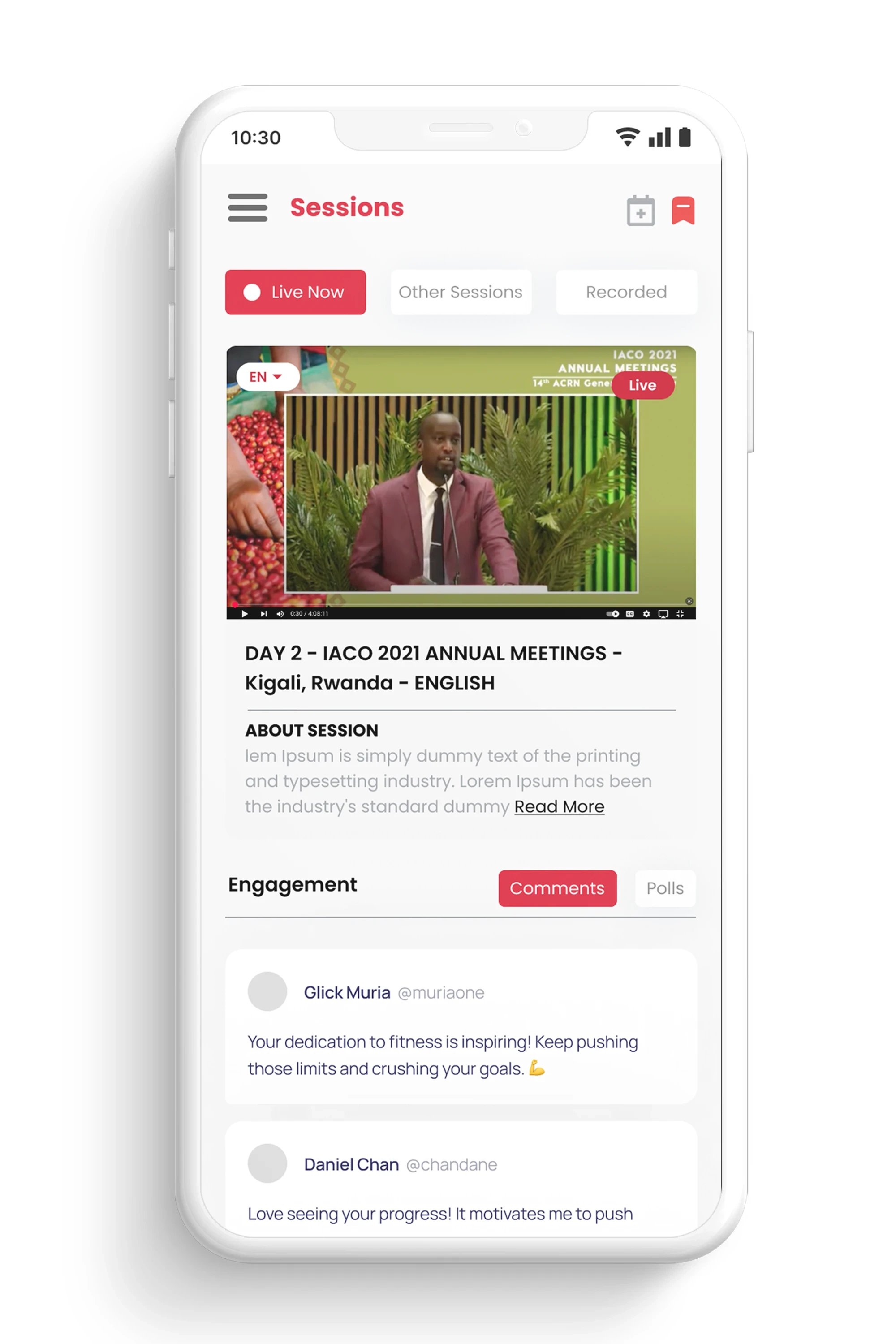
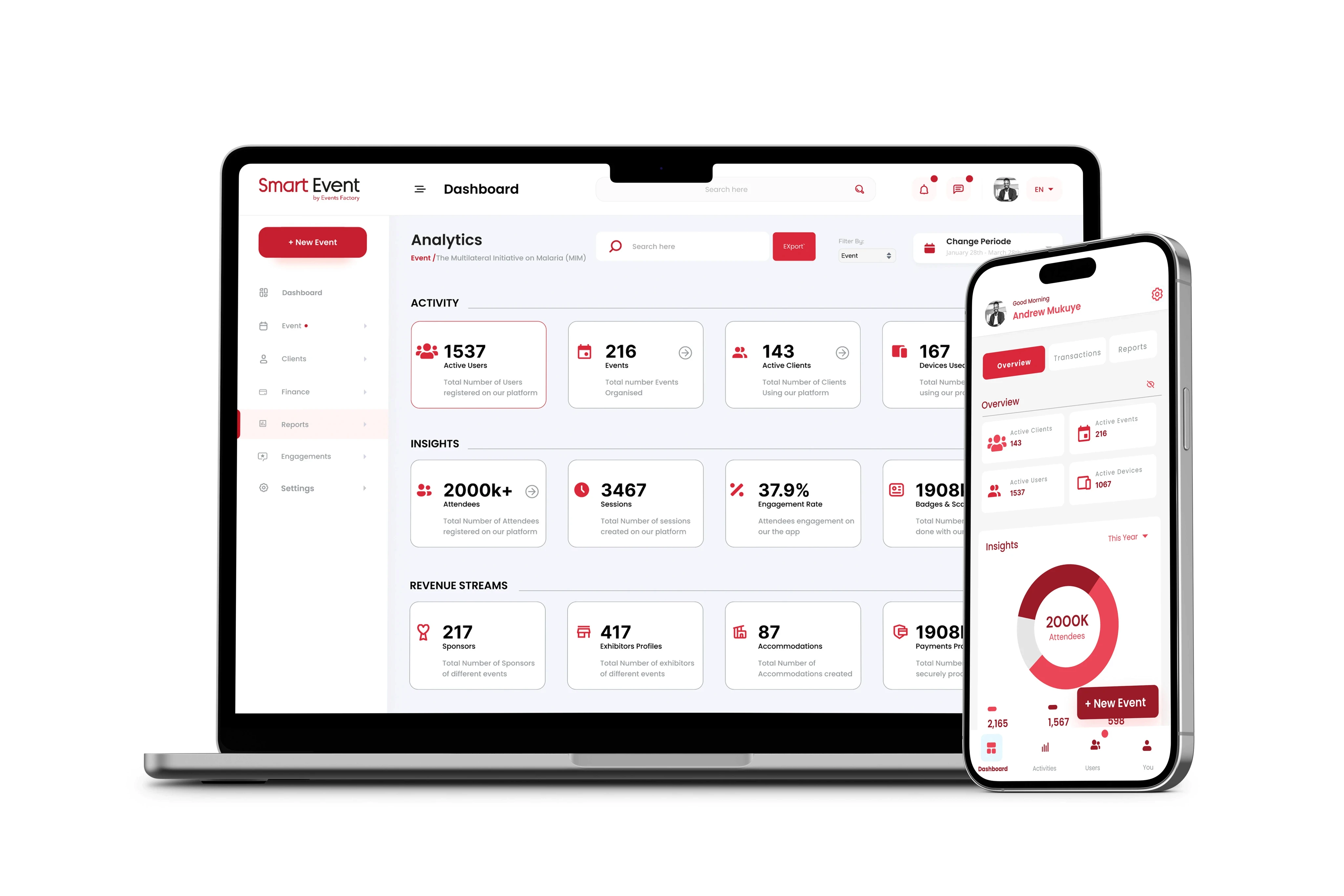
As Product & UX Designer, I led the end-to-end experience across the attendee mobile app, organiser dashboard and public event website, creating a scalable platform that simplified operations while delivering a more engaging experience for attendees.
Project Outcomes
Unified three disconnected event experiences into one product ecosystem
Simplified registration and ticket purchasing
Reduced operational complexity for event organisers
Established a shared design system across web and mobile
Created a scalable platform supporting in-person, hybrid and virtual events

Project Overview
Managing a modern event extends far beyond selling tickets.
Organisers need to publish event information, process registrations, communicate with attendees, monitor sales, manage check-ins and measure engagement after the event concludes. Many teams relied on separate tools for each of these tasks, creating duplicated work, inconsistent data and unnecessary administrative overhead.
At the same time, attendees experienced disconnected journeys between discovering an event, purchasing tickets and participating on the day.
Our goal was simple:
Create one connected experience that supports organisers before, during and after every event while making participation effortless for attendees.
My Role
Product & UX Designer
I led the product design across three connected experiences:
Public event website
Attendee mobile application
Event management dashboard
The Challenge
Although organisers and attendees interacted with the same event, they experienced it through completely different systems.
For organisers this meant:
Managing registrations manually
Switching between ticketing, communication and reporting tools
Limited visibility into event performance
Time-consuming administrative work
For attendees it meant:
Finding important event information across multiple channels
Complicated ticket purchasing
Poor visibility into schedules and venue information
Limited communication before and during events
The more successful an event became, the more difficult it became to manage.
Instead of helping organisers scale, the tools created additional operational complexity.
Defining Success
Rather than measuring success by interface redesign alone, we aligned around outcomes that would improve both organiser efficiency and attendee experience.
We aimed to:
Reduce friction during event discovery and registration
Simplify ticket purchasing
Improve access to event information
Reduce administrative effort for organisers
Create a consistent experience across every platform
Build a flexible foundation capable of supporting future event formats
Design Strategy
Designing one connected ecosystem
Rather than treating the website, mobile app and dashboard as independent products, we designed them as different touchpoints within one continuous event journey.
Every interaction was connected, from discovering an event to reviewing post-event analytics.
This reduced context switching for organisers while creating a more consistent experience for attendees.
Prioritising the moments that matter
Not every screen carries equal value.
We prioritised the interactions users completed most frequently:
For attendees:
Discovering events
Purchasing tickets
Viewing schedules
Receiving live updates
For organisers:
Creating events
Managing attendees
Monitoring ticket sales
Reviewing analytics
By focusing design effort on these high-frequency workflows, we improved the overall experience without increasing product complexity.
Making information easier to act on
Event products contain large amounts of information.
Instead of presenting everything equally, we created clear visual hierarchy that helped users identify the next action immediately.
For attendees this meant:
Clear ticket selection
Simple registration
Easy schedule navigation
Personal agendas
Real-time notifications
For organisers this meant:
Live sales visibility
Simplified attendee management
Actionable reporting
Exportable event data
The goal wasn't simply cleaner interfaces.
It was reducing decision fatigue.
Building for growth
The platform was designed to support future expansion without requiring a complete redesign.
The modular architecture allows additional functionality such as:
Sponsor management
Vendor marketplaces
Interactive venue maps
Networking experiences
Multi-event administration
This ensured the product could evolve alongside customer needs.
Constraints & Trade-offs
Designing a unified platform required balancing ideal experiences against technical realities.
Legacy event data couldn't always be migrated automatically, so import workflows were introduced to preserve existing customer information.
Real-time synchronisation across web and mobile also presented engineering challenges. Rather than delaying the entire product, we prioritised live ticket sales and essential operational metrics while allowing less critical analytics to update periodically.
Performance was another key consideration.
Rich event imagery is valuable for marketing, but excessive media slowed mobile experiences.
We deliberately favoured faster loading times and responsive performance over visually heavy layouts.
Design System
Consistency became one of the platform's greatest strengths.
A shared component library ensured attendees, organisers and administrators encountered familiar interaction patterns regardless of platform.
This reduced learning time, accelerated development and created a cohesive brand experience across mobile, web and dashboard products.
Impact
The redesign transformed Smart Events from a collection of disconnected workflows into a unified event management ecosystem.
For organisers
Simplified day-to-day event operations
Centralised ticketing, attendee management and reporting
Reduced reliance on multiple external tools
Improved visibility into event performance
For attendees
Faster event discovery
Easier registration and ticket purchasing
Better access to schedules, speakers and venue information
Improved engagement throughout the event lifecycle
For the product
Established a scalable design system
Supported web, mobile and dashboard experiences
Created a foundation for future event management capabilities
Enabled support for physical, hybrid and virtual events within one platform
Reflection
This project changed how I think about platform design.
Initially, it was tempting to optimise each interface independently.
As the project evolved, it became clear that the real opportunity wasn't improving individual screens. It was improving the connections between them.
Lets
design
build
create
incredible work together.
waymakandrew@gmail.com
© 2026 AD | www.natiiive.com
•
